THE BOMBSHELL OF THE WEEK
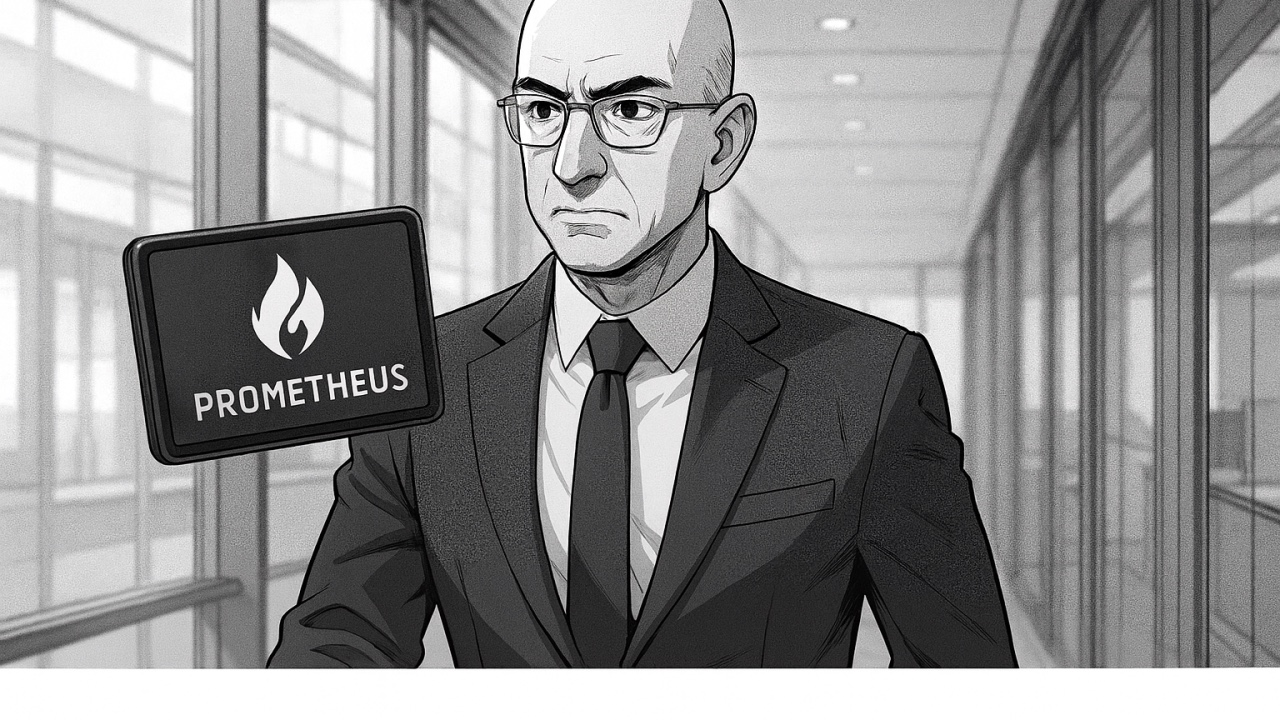
Jeff Bezos comes out of retirement: takes over as co-CEO of Prometheus
After four years out of the executive game, Jeff Bezos has just taken on the role of operational co-CEO at Project Prometheus — an AI startup valued at $25B with $6.2B in funding.
He’s not an advisor. He’s not a board member. Bezos is running day-to-day operations.
The last time this happened was Steve Jobs returning to Apple in 1997.
The numbers are staggering: $6.2B is 10x Anthropic’s Series A ($580M). It’s comparable to OpenAI’s total funding, but concentrated in a single company nobody had heard of until this week.
What does Bezos see that we don’t?
Sources reveal that Project Prometheus is building “foundational AI beyond LLMs” — probably AGI infrastructure or quantum AI. It’s not another ChatGPT wrapper.
Bezos left Amazon four years ago and spent all that time without touching a CEO seat. His time is worth more than money. If he’s coming back personally, he believes this can be as big as AWS was for cloud.
This news lands as Sundar Pichai warns that AI valuations are “very elevated,” 17,280 tech workers were laid off this week, and VCs are saying in private: “AI bubble is peaking.”
While the market panics, Bezos goes all-in. The perfect counter-play.
Implications: if Bezos — the best long-term bet executor in tech — believes AGI is real and is betting his personal time on it, this validates foundational AI as the bet of the decade.
Expect a massive recruitment war. And Amazon will probably integrate this tech into AWS.
The question: what does Bezos know that Sam Altman, Demis Hassabis and Dario Amodei don’t? Or worse: does he know the same thing but has the capital to play a 10-year game while they play a 3-year one?
When the founder of Amazon returns as CEO, it’s not a bubble signal. It’s a signal that the real game is just beginning.
POWER MOVES
1. Monarch Tractor warns of a possible shutdown (Nov 20)
Autonomous tractor startup Monarch Tractor warned its employees on November 20 that it may “cease operations.”
The context: Monarch had raised significant investment to build electric, autonomous tractors for agriculture. The sudden alert suggests they’re running out of money.
The pattern: this is the third agtech or robotics startup in trouble in this final quarter of 2025. Investors are putting their money into pure AI, not specialized physical products.
2. Synopsys to lay off 2,000 employees in 2026
Synopsys (Mountain View, California) confirmed it will lay off approximately 2,000 workers during 2026. Together with another company called Clari, they’ve announced 271 combined layoffs in the Bay Area, specifically in Sunnyvale.
Why this matters: Synopsys is the world leader in chip design software. If they’re laying people off right as Nvidia and AMD are booming, it means that even in the semiconductor business, profit margins are shrinking.
3. Sundar Pichai warns: “Nobody is safe if the AI bubble bursts”
In a BBC interview this week, Google CEO Sundar Pichai declared that no company is safe if AI investment collapses. And he added something more worrying: he sees current AI company prices as “very elevated.”
The alarm signal: when the head of Google — which is investing more than $100,000 million in AI — publicly says prices are inflated, it means the ceiling is close.
In plain English: expect a significant correction in AI startup valuations during 2026.
MONEY TALKS
1. A downpour of investment: $728 million in just 4 days
Between November 18 and 20, AI startups raised staggering amounts:
The biggest:
- Sakana AI (Japan): $135 million — valued at $2,650 million
- Function Health: $298 million, valued at $2,500 million
- Suno (AI music): $250 million
- Norm AI (legal): $50 million from Blackstone
All the money is going to tech infrastructure or very specific applications (legal, health, music). Generic consumer AI no longer interests investors.
2. Amazon issues $12,000 million in bonds for its AI war
Amazon has just issued $12,000 million in bonds — its largest issuance in three years — earmarked primarily for expanding its AI infrastructure.
The data point: Amazon already spent $34,200 million in the third quarter of 2025, up 61% from the year before.
In plain English: Amazon is in an arms race with Microsoft and Google to dominate AI infrastructure. These additional $12,000 million mean they expect compute capacity demand that’s orders of magnitude beyond what they have now.
3. Huawei announces breakthrough that doubles AI efficiency (Nov 21)
Huawei revealed on November 21 that it has technology that can double the efficiency of AI processor utilization, going from the current 30-40% to 70%.
Why this is geopolitical: if Huawei really achieves double Nvidia’s efficiency, China could train the same AI models using half the chips. This would partially sidestep US export restrictions.
If this is real and not just marketing, it completely changes the balance of power in AI infrastructure worldwide.
PRODUCT SECRETS
1. OpenAI launches parental controls for ChatGPT
OpenAI announced on Monday new parental controls that let parents limit how teenagers use the chatbot.
Why it matters: this is NOT an altruistic feature — it’s preparation for incoming regulation. Legislation on minors’ access to AI is expected in Europe and the United States in the first quarter of 2026. OpenAI is getting ahead of it.
The strategic advantage: if regulation demands parental controls, OpenAI will already have them running while its competitors scramble to implement them.
NUMBERS vs REALITY
Verizon to lay off 15,000 employees
Verizon announced this week the layoff of approximately 15,000 workers.
Why it matters for Silicon Valley: although Verizon is headquartered in New York, this signals that traditional telecom companies are restructuring aggressively in the face of Big Tech competition in 5G and distributed cloud computing.
The connection: remember that Nvidia just invested $1,000 million in Nokia. Tech companies are devouring the traditional telecom market.
VALLEY DRAMA
Medtech summit: AI and robotics in healthcare (Nov 19-20)
A summit was held at the Santa Clara Convention Center focused on artificial intelligence, robotics and digital health for medical devices.
The important part: unlike generic AI startups, medical AI is solving concrete problems (surgical assistance, diagnostics). FDA regulation forces a level of rigor that consumer AI lacks.
The investment thesis: medical AI will deliver better returns than consumer AI over 3-5 years because it’s solving real problems and people are willing to pay for solutions that work.
WHAT TO WATCH NEXT WEEK
1. Y Combinator F25 Demo Day (Dec 3)
Just 11 days until Demo Day. Watch for:
- How many startups are AI? (I expect more than 75%)
- Will any emerge with pre-funding announcements?
- Which verticals dominate?
MY TAKE
This week tells two completely contradictory stories about artificial intelligence.
On one hand, the money keeps flowing nonstop, and Jeff Bezos is stepping away from that frenetic life of glamour to personally run an AI startup.
On the other hand, the CEO of Google publicly warns that valuations are “very elevated.”
Verizon lays off 15,000 people. Synopsys, the company that makes the software used to design chips, announces 2,000 layoffs precisely while Nvidia and AMD are breaking records.
Something here doesn’t add up.
Are we in the final phase of the AI bubble cycle?
Money keeps flowing in on inertia, because nobody wants to miss the next boom. But the smart money is flashing warning signals.
I believe we’re going to see a significant correction in AI startup valuations during the first half of 2026. And when that moment comes, only companies with three things will survive: real, verifiable revenue, a genuine competitive moat beyond being ChatGPT’s unofficial offspring, and a business model that actually works at scale.
Thanks for reading. One more week I’ve enjoyed spending time staying on top of things for you.
Disclaimer: I write this newsletter for you for informational purposes. It does not constitute investment advice. Do your own research before making financial decisions.